

Best Practices for Business Buyers When Meeting with Prospective Sellers
Explore best practices for business buyers looking to meet with prospective sellers. From dressing professionally to asking the right questions, this guide covers essential steps to ensure a smooth and effective business acquisition process. Dive into key concerns for both buyers and sellers, along with top questions to streamline your buyer - seller meeting.
Navigating the world of business acquisitions can be a complex process. When a business buyer meets with a prospective seller, preparation and professionalism are essential. Below are some guidelines and best practices for business buyers to consider when preparing for a meeting with a seller.
1. Dress the Part:
Clothes to Wear: Dressing in professional attire, or in a manner consistent with the industry you're interacting with, is crucial. It not only demonstrates your seriousness but also shows respect for the seller. Avoid overly flashy attire; instead, aim for a polished, neutral, and business-appropriate look.
2. Prepare Thoroughly:
Do your homework on the business you're considering buying. This includes understanding the industry, the competition, and the company's financials.
3. Respect the Seller's Concerns:
Confidentiality: Many sellers are concerned about information leaks that could disrupt their business operations. Assure them that all data and discussions will be kept confidential.
Timeframe: Understand that sellers might be anxious about the length of the buying process. Be transparent about your timeline and intentions.
4. Be Aware of Buyer Concerns:
Due Diligence: This is your opportunity to deeply understand the business. Ensure that you have access to all necessary records and documents.
Valuation: Understand how the business is valued and be prepared to negotiate on price if necessary.
Post-acquisition Plans: Consider how you plan to run the business after acquisition. This can impact negotiations and seller considerations, especially if they care about the business's future direction.
5. Top 10 Questions to Ask:
Financials: Can I see the last three years of financial statements, including profit and loss, balance sheet, and cash flow?
Client Contracts: Are there any long-term client contracts in place, and if so, can they be transferred to a new owner?
Employee Relations: What are the current employee contracts, benefits, and morale? Are there any key employees I should be aware of?
Business Assets: What assets are included in the sale? This could range from physical assets to intellectual property.
Liabilities: Are there any outstanding debts, litigations, or potential liabilities that I should be aware of?
Reason for Selling: Why have you decided to sell the business at this time?
Market Position: How does the business compare to competitors in the market? What is its unique selling proposition (USP)?
Growth Opportunities: Where do you see the most significant opportunities for growth or expansion?
Challenges: What are the most significant challenges the business currently faces?
Transition Period: Are you willing to stay on for a transition period to help with the handover? If so, for how long?
Meeting with a prospective seller is a significant step in the business buying process. Approach it with diligence, respect, and thoroughness to ensure the best possible outcome for both parties. For more tips and recommendations contact Jim Peddle at president@playbookadvisory.com.
Protecting Your Investment: The Power of Reps and Warranties in M&A
The purpose of reps and warranties is to provide the buyer with assurance that the target company is in good condition and that the buyer is not acquiring any undisclosed liabilities or issues that may negatively impact the company's value. If any of the representations and warranties turn out to be false, the buyer may be entitled to seek damages from the seller.
Reps & Warranties - Legal Agreements
Reps and warranties are a critical component of any merger or acquisition (M&A) transaction. They are representations and promises made by the seller regarding the current state and future performance of the target company, and serve to protect the buyer from any undisclosed liabilities or issues that may arise after the closing of the transaction.
In M&A transactions, the target company's reps and warranties may cover a wide range of topics, including but not limited to financial statements, taxes, contracts, liabilities, intellectual property, compliance with laws and regulations, and the absence of certain events such as pending lawsuits. These representations and warranties are typically outlined in the purchase agreement, which is a legally binding contract between the buyer and seller.
The purpose of reps and warranties is to provide the buyer with assurance that the target company is in good condition and that the buyer is not acquiring any undisclosed liabilities or issues that may negatively impact the company's value. If any of the representations and warranties turn out to be false, the buyer may be entitled to seek damages from the seller.
It is important to note that reps and warranties are not guarantees of future performance. They are simply representations of the target company's current state and conditions, and they do not extend beyond the closing of the transaction. This is why due diligence is a crucial step in the M&A process, as it allows the buyer to thoroughly examine the target company and verify the accuracy of the reps and warranties.
The level of reps and warranties offered by the seller can vary depending on the size and complexity of the transaction, as well as the negotiating power of the buyer and seller. In larger, more complex transactions, the reps and warranties may be more comprehensive, while in smaller transactions they may be less so.
Target Working Capital
In addition to reps and warranties, another important consideration in M&A transactions is target working capital. Target working capital refers to the amount of cash and other liquid assets that a target company has on hand at the time of the transaction. This is an important consideration because it can affect the buyer's ability to operate the company after the transaction is complete.
The target company's working capital is typically calculated by subtracting its current liabilities from its current assets. The buyer and seller will typically negotiate the target working capital amount that should be maintained by the target company after the transaction is complete. This can be an important factor in determining the purchase price of the company, as the buyer may require a higher purchase price if the target company's working capital is lower than expected.
It is important to note that target working capital is not the same as cash on hand. Cash on hand refers to the amount of cash that a company has available at a given time, while target working capital takes into account the company's current liabilities as well as its current assets. This makes target working capital a more comprehensive measure of a company's financial health and its ability to operate after the transaction is complete.
In summary, reps and warranties and target working capital are critical components of any M&A transaction. Reps and warranties provide the buyer with assurance that the target company is in good condition and free from any undisclosed liabilities, while target working capital affects the buyer's ability to operate the company after the transaction is complete. Both reps and warranties and target working capital should be thoroughly reviewed and negotiated as part of the due diligence process in order to ensure a successful M&A transaction.

From Search to Success: Buying a Business with SBA Financing - A Real World Example
How much do SBA loans cost when utilized to purchase a business under $5,000,000? Here is a real-world example of a deal closed by Jim Peddle at Playbook Advisory in 2019.
Purchase Price $1.8mm
20% Down Payment
How to Structure a $1.8mm Transaction with an SBA Loan for Business Acquisition
Further Reading:

Author - Jim Peddle, Business Broker
Are you considering buying a business but unsure where to start? Understanding the nuances of acquiring a business, from finding the right opportunity to securing financing, is crucial for a successful transition. Every purchase journey is unique, yet there are common steps and considerations that all prospective buyers should know. In this article, we delve into these critical aspects, using a real-world example to illustrate the process. We'll also provide a detailed breakdown of the costs, fees, and commitments involved in securing a lender, ensuring you have all the information needed to navigate your business buying journey confidently
The Deal Structure
First, a breakdown of the transaction;
Purchase Price - $1,800,000
Buyer Down-payment - $360,000
Loan Amount - $1,440,000
Earnest Deposit - $15,000 (Paid by Buyer at Letter of Intent)
Working Capital Line Drawn at Closing $160,000
Interest Rate - Prime Rate + 2.75%
Fees Charged by Lender
Lenders charge the borrower fees at closing as well as at application for an SBA loan. Buyers should always require a written commitment letter from the lender that breaks down the projected costs of the transaction.
Buyer Deposited $5,000 with Lender upon signing the commitment letter.
Guarantee Fee Paid to Lender - Typical 3% or $43,200
Note: SBA charges an upfront fee as well as an annual fee based on the loan balance. Currently, this rate is 55 Bps (.55).
Lender Legal Fees - $5,000
These charges are paid by the borrower to the lender for the loan only.
Lender Processing Charges: (Bank fees will vary from bank to bank)
Lien Searches $1,195.22
IRS Transcripts $25
Packaging Fees $2,500
Wire Fees $150
3rd Party Business Valuation $2,500
Site Inspection - Business $130
Total Fees $54,700.22
Note: Fees are financed within the loan
Working Capital - Other Adjustments
In most transactions, the lender will establish a line of credit for the borrower that is to be utilized by the borrower for working capital. There are no restrictions on this line of credit as long as the funds are utilized for business purposes. Rates can vary by lender but are the terms are variable and also tied to the prime rate.
Amount of Working Capital at Closing $160,000
Customer Deposits
$190,000 of Customer Deposits Credited at Closing to Buyer
Summary
In this real-world example, the buyer successfully completed the acquisition with a net payment of less than $10,000 at closing. This amount was achieved after accounting for a line of credit for working capital and adjusting for customer deposits. It is important to note that this figure does not include the buyer's attorney fees, which were not disclosed in the transaction details.
For more information on SBA financing or details on purchasing a business contact Jim Peddle, Business Broker, Playbook Corporate Advisory, Inc.
Further Reading:

From Application to Approval: The 3 Must-Have Components for a Winning Business Loan Structure
In the past 9 years of brokering businesses for sale, I’ve found that almost 100% of the buyers closing on one our listings for sale have completed the purchase of at least one real estate property. It’s not surprising as the average age of buyers is between 45-55 years old, by that age, many people are already on their 2nd or 3rd primary residence.
Bank Loan
Down-Payment
Seller Notes
In the world of business sales, brokers play a crucial role in guiding buyers through the process of acquiring a new business. At Playbook Advisory, we have been brokering business sales for the past 9 years and have seen a common trend among our buyers – almost 100% of them have purchased at least one real estate property, usually their primary residence. This experience proves to be helpful as these buyers move on to the financing stage of buying a business.
As a former mortgage broker, I understand the importance of educating buyers on their options for structuring a business loan. In my experience, financing a business is similar to purchasing a home and buyers need to be made aware of this. By instilling confidence in them, we make the process smoother and increase the chances of a successful transaction with their business acquisition lender.
The majority of businesses sold at Playbook Advisory are financed using a combination of three key components – a bank loan, the buyer's down-payment or equity injection, and a secondary loan from the seller, also known as a "Seller Note." This combination provides a flexible and well-rounded approach to financing a business purchase.
Let's delve deeper into these three components of structuring a business sale.
Bank Loan A bank loan is typically the primary source of financing for a business purchase and is usually an SBA 7A loan from a local banker. The lender will underwrite the purchase and assess the cash flow generated by the underlying business being purchased to determine if it is sufficient to cover the loan payments. The loan amount will typically be around 75-80% of the purchase price, similar to a home purchase.
For the loan to be approved, the cash flow, or Seller's Discretionary Earnings (SDE), must be greater than $150,000. If the SDE is less than $150,000, there are alternative options, which we will explore in a separate article.
It is important to note that terms for SBA 7A loans are competitive, so it pays to shop around and compare offers from 2-3 lenders before making a decision. Obtaining term sheets from each lender will give you a better understanding of the terms and conditions of each loan offer.
2. Buyer's Down-Payment: The buyer is expected to come to the table with a minimum of 10% of the purchase price but ideally, they should have 20% available in savings, retirement plans, IRAs, or real estate equity. Having a working spouse can also be beneficial as their secondary income can support household bills and monthly obligations, such as mortgage payments, school tuition, car payments, and other expenses.
3. Seller Notes: At Playbook Advisory, we encourage buyers to consider using seller financing as part of their business purchase financing strategy. Seller financing, in the form of a "Seller Note," is similar to a home equity line of credit (HELOC) that homeowners commonly use when they put less than 20% down on a home. The banks loan is ahead of the Seller Note which can cause issues with Sellers concerned about getting paid. Finally, there may be standby provision that does not allow the Buyer to make payments on their note until the first loan is paid down substantially or paid off entirely.
When a buyer sends us an initial letter of intent, one of the first things we look for is the amount of seller financing they are requesting. All of our business brokers are used to advising clients that they should be prepared to finance a portion of the deal, as seller financing provides numerous benefits. However, it is not uncommon for sellers to be hesitant about providing financing, as there is a risk of not being paid back. With lenders increasingly requiring full standby (no payments) for up to 5-7 years, sellers may feel nervous about this aspect of the deal.
In conclusion, prospective buyers should start talking with lenders and their business brokers as early as possible regarding their financing plans. By doing so it ensures a smoother process and leads to a successful closing.

Uncovering the Top Sources for Finding a Business to Buy
Interested in buying a business? Here are some tips and recommended 3rd Party websites you can visit.
Online Resources To Assist Buyers in Search of a Business...

At our firm, we are contacted daily with Buyer inquiries for active listings that we have available for sale. By our estimates, over 65% of these prospects come from online ads, mainly from 3rd party websites. In this post, I' thought it would be helpful to summarize the different websites where buyers can identify opportunities;
Business Sales are Different than Residential Real Estate Sales:
First, Buyers should understand the market for selling a business is very different than when you purchase a home. Realtors have a Multiple Listing Service (MLS) that broadcasts the sale of their listing and also have an active company website that advertises pictures, listing details and financing options. Confidentiality is not required so Buyers see exactly what is for sale and for how much. This is not how business brokers sell companies below are platforms utilized by both business brokers and Sellers who are listing for sale by owner.
3rd Party Websites
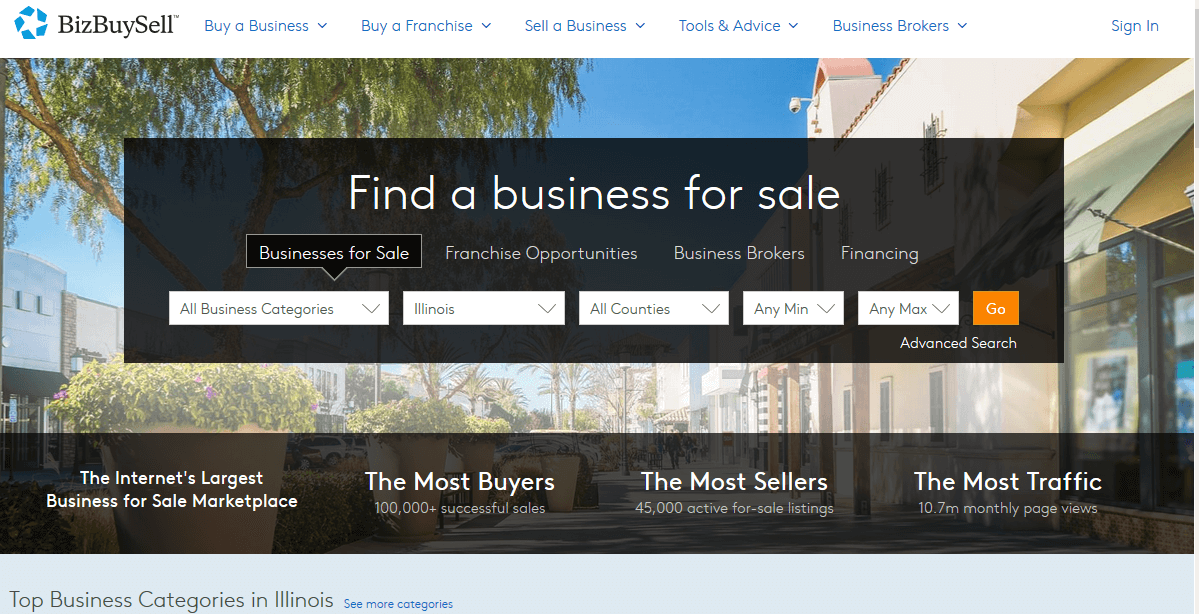
Bizbuysell (Largest website online)
One of the largest 3rd party websites that is devoted to the listing and selling of businesses for sale in the United States. Business Brokers pay a monthly subscription to list and market their listings. Business owners can also sell by owner for a monthly rate. The issue for sell by owner is confidentiality is breached almost immediately as sellers respond to buyers inquiries. If confidentiality is important think twice about selling online. Best for businesses up to $5,000,000. Great majority of buyers utilize SBA financing on deals over $500,000. We love www.bizbuysell and Playbook Advisory is an active & elite member since 2016.
Bizquest.
Bizquest is a sister site of Bizbuysell.com and although they say they generate different buyers are experience is they are the same at least here in Chicago. Again, best for deals that are up to $5,000,000 and most buyers need SBA financing for acquisition financing. If you are choosing between the two sites pick bizbuysell. Our firm is also an elite member of the platform find our profile here.
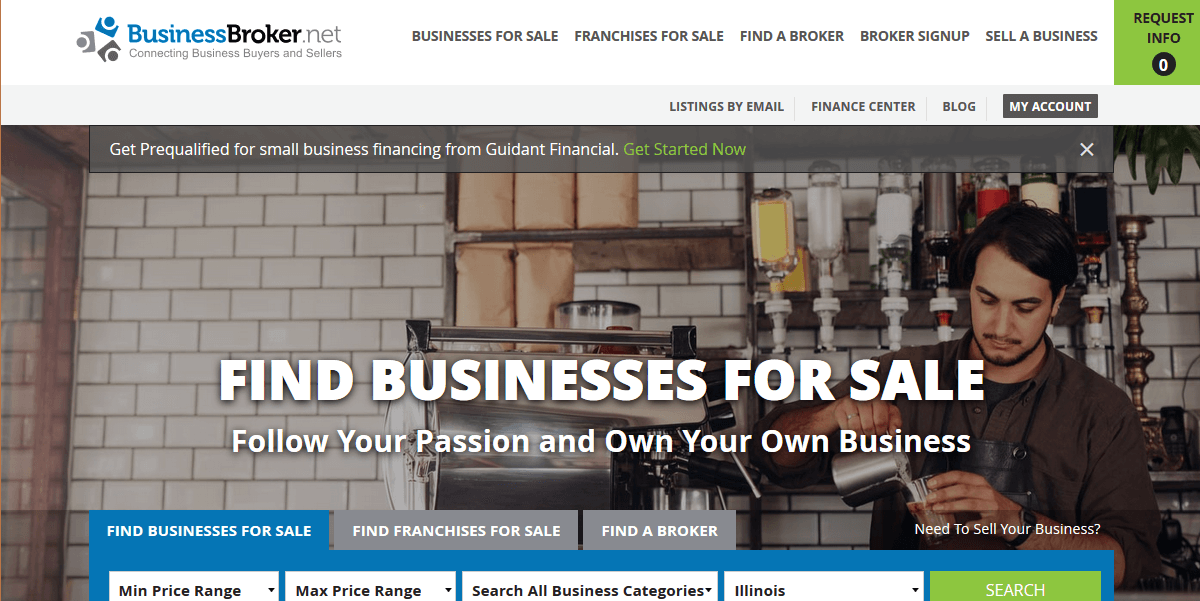
Businessbroker.net
Another site similar to the above two but in our experience traffic is much lighter from businessbroker.net. We have generated successful buyers from the site so we continue to utilize the platform for our active business for sale listings.
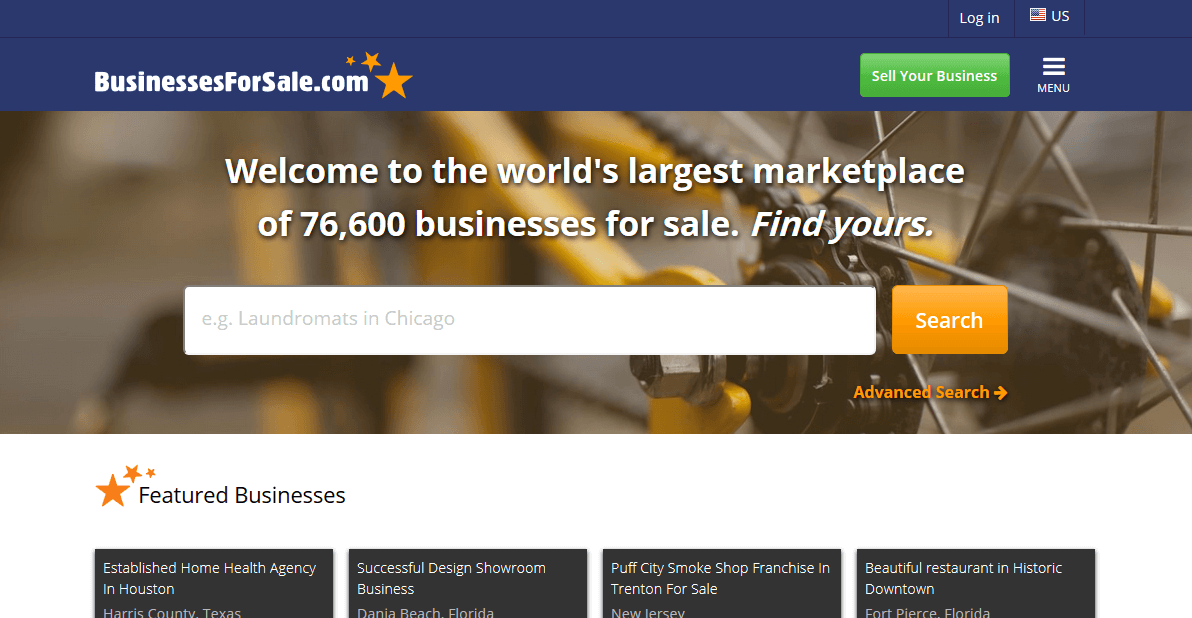
Businessforsale.com
USA.businessforsale.com is a US & UK platform that our firm has not utilized in 2018.
Dealstream
Formerly knows as mergernetwork the site lists businesses a little differently and makes buyers register. Brokers can confidently use the site for generating buyers but in our experience they rank below the top 3 sites in this post. With that said the site has been working to make improvements but they need to clean up older listings that are no longer for sale.
Axial
Axial focuses on larger M&A transactions and works hard to generate listings of size ($5mm & higher). In our experience there are more tire kickers and the follow through is low from buyers on the site, however, our typical listing is not necessarily a match so our sample size is low. Very professional platform and Axial charges a premium to buyers searching for a business to buy.
Equire
Another site seeking to list companies with a minimum of $750,000 in cash flow (SDE or EBITDA). Our firm has not listed any companies on the site so I don’t have relevant feedback for the site.
As you can see, there are a number of 3rd party websites devoted to listing businesses for sale in the United States. We typically find buyers only concentrate on a few, however, it might make sense for buyers to monitor more than one or two in order to identify more opportunities.


Business Broker Websites:
Buyers can also receive listing information directly from local business brokers by signing up for the brokers listing alerts or newsletters.
At Playbook Advisory, we attempt to place buyers into the right bucket so that they only receive listings that are of interest, however, it’s fairly common for buyers to purchase a business they had no idea would be of interest so it helps to keep an open mind as you search.
If you contact us please let us know the following;
Location you would like the business to be
Amount of Cash Flow/SDE required
Amount your willing to invest
Are you interested in Financing a business purchase? We can refer you to qualified SBA lenders in the Chicago area.
Although I'm aware of other Chicago business brokers that might be good for buyers to monitor send me an email I will respond with some tips on who I think can help your search based on your area of interest.
The search for a business can be exceedingly difficult at times but the rewards are life changing. Contact Jim Peddle at 312-525-9622 to discuss your needs or email me at president@playbookadvisory.com.
Other Helpful Blog Posts for Buyers:

What Buyers Should Know When Getting an SBA Loan...Jeff Hunt First Home Bank
Insider information for Buyers in need of SBA Financing for the acquisition of a business for sale. Contact Jim Peddle at 312-525-9622 for more details.

First Home Bank provides SBA 7(a) loans to a variety of businesses and for various purposes with business acquisition financing being a significant focus. As a top 10 SBA lender in the country, our team’s expertise extends beyond financing business acquisitions, and includes bankers with experience as both business owners/principals and financial advisors, making First Home Bank the first choice for business buyers seeking a financial partner to assist in an acquisition financing. We have compiled a list, a list we call the “Bankers’ Dozen”, of the most common roadblocks that come up during an acquisition transaction. The key is recognizing items that need to be addressed early in the process and discuss with your client and banker so there are no last-minute closing delays.
#1 No Creative Addbacks
All addbacks must be documented through IRS tax returns and/or interim company financials
Allowable addbacks can include:
Nonworking friends & family on the payroll if reported on W-2
Unusually high fees, legal or bad debt
Excessive owners compensation
Non-recurring expenses such as moving costs or product development expenses
#2 Seller Tax Return Verification
Get a signed IRS Form 4506T from a seller on day 1. If there are any discrepancies that need to be addressed, the seller can begin to clear those up early in the process
#3 Comprehensive Business List of Insurance Requirements to Close
SBA’s insurance requirements are not negotiable. Obtain a list from the seller of all business insurances currently in place. If insurances need to be added or amended to comply with the SBA, there will be plenty of time to be in compliance if an assessment is done upfront.
First Home Bank prefers to work directly with the insurance agent to obtain required insurance certificates with the appropriate SBA language. This allows the buyer to focus on other deal-related items.
#4 Collateral Shortfall will require Life Insurance
There’s no getting around this. If there is a collateral shortfall, life insurance in the amount of the collateral shortfall will be required for all guarantors.
If the buyers/guarantors do not already have a life insurance agent, they can work with a “quick close” insurance provider as soon as the loan is approved.
Sometimes the buyers/guarantors already have a life insurance policy in place. If so, make sure to collect copies of existing life policies and confirm that they are assignable.
Provide the bank with contact information of the insurance provider so the bank can obtain the policy with the appropriate assignment.
#5 The Need for more Equity in the Deal
As you are probably aware, the equity requirements for business acquisitions are changing with the release of the SBA’s new version of its Standard Operating Procedures (SOP 50 10 5(J)).
While the SBA will be providing some additional insight into these changes, the basic change is that the buyer must contribute a minimum of 10% equity towards the entire transaction and there must be at least 10%
equity on the post-transaction pro form balance sheet. A seller note can still be used and can provide for up to half of the required equity injection. However, the seller note must be on full standby (no payments at all) for the life of the SBA loan.If the source of the buyer’s equity is coming from a gift, a Gift Letter with 2 months of bank statements showing the source of this gift will be required.
#6 Seller Keeping AR & Cash at Close
In this situation, the buyer must prove that they will have sufficient working capital at closing.
If necessary, the loan could include a 90-day working capital supply.
The Bank will need to document post-closing liquidity.
#7 Know Buyer’s Personal Credit Score
If under 700, get a written explanation and make sure that there was no prior loss to the US government.
#8 Personal History Concerns
A Resume and Statement of Personal History questions are required for each guarantor.
The questions of “Have you EVER?” have no limitations on how long ago.
If “yes”, have the guarantor complete the SBA Form 912 and provide supporting documentation.
Knowing issues early allows the Bank to clear through them during underwriting which can avoid delays
#9 Citizenship of the Buyer
Determine the citizenship status of a buyer early on and get a copy of documentation early.
They can obtain SBA financing if they have a green card and are legal permanent residents of the U.S.
#10 Leased Space & Landlord Subordination
The term of the Lease must be equal to the term of the loan, and renewal options can count towards the term.
Prepare the seller to discuss the subordination requirement with the landlord and assist with getting subordination executed by the landlord and buyer.
#11 Complete Equipment List
Use the depreciation schedule in the seller’s business tax returns as the starting point.
The serial numbers for all equipment over $5,000 must be included.
#12 Relevant Management Experience
If the buyer does not have direct industry experience, obtain a detailed resume that expands on transferable management skills.
#13 Pledge of Personal Assets as Collateral
If the business assets do not fully secure the loan, the SBA requires that any personal real property with lendable equity must be pledged as collateral.
If there is no lendable equity, the pledge of the guarantor’s personal residence may not be required.
First Home Bank is a Top 10 Nationwide Preferred SBA Lender specializing in small business loans across a wide array of industries for business acquisitions, commercial real estate and equipment financing and working capital.
Other Reading;
Confidentiality - Why it’s important in M&A
Where Can I Find a Business to Buy?

New Buyer Engagement for Area Freight Broker
Playbook Advisory is pleased to announces a new client who is seeking to acquire a competing freight brokerage company to continue their impressive growth...
Playbook Advisory has been retained by a buy-side client to identify a freight broker in Chicago
Exclusive Engagement to source, negotiate and successfully close an acquisition target:
Our client is looking to continue its impressive growth and has engaged our firm to assist in sourcing potential acquisition candidates. The company is interested in meeting with freight brokers and business owners who see the value in teaming up with a leading-edge company offering customers the very best in customer service as well as a proprietary technology platform.
We are interested in speaking with owners of competing Freight Broker who's companies fit the following criteria:
Located anywhere in North America
Freight Brokers with their own customers
Pure Brokerage is preferred
Handle Specialty Parcels for customers
Ideally 4-25 pallets per delivery
$1mm in annual revenues are the ideal target
Customer Concentration is acceptable - 2 or 3 clients can generate 50% of business
Sellers seeking a transition strategy with a leading Chicago based freight broker company
The Playbook Advisory sales team representing the seller is led by Jim Peddle, Founder & President. Please contact Jim directly at 312-525-9622 or by email at president@playbookadvisory.com.
About Playbook Advisory:
Playbook Advisory is a leading U.S. business brokerage firm that is headquartered in Chicago, IL. Our firm works with business owners seeking to sell their successful lower middle-market companies utilizing our proven marketing and sales platform. Playbook Advisory also targets acquisition opportunities for growth-minded business owners.
Facts About the Freight Brokerage Industry:
1. Nearly all goods transported in the United States move by truck at some point in the journey. Trucks carry over 60% of the annual gross tonnage moved in the US, making trucking the “backbone” of the intermodal (AIR, SEA, LAND) transportation network.
2. Each day millions of big rig tractor-trailers (also known as semi-trucks,18-wheelers and motor carriers) move freight throughout the United States from one destination to another. These rigs pull various types of cargo ranging from perishable foods, consumer goods to general cargo. In fact, 70% of all manufactured and retail goods transported within the US on an annual basis are via truck.
3. Transportation occurs daily, over $12,000,000,000,000 (trillion) dollars per year globally. Transportation within the US exceeds $1 trillion annually, of which US trucking represents well over $600 billion. Source:https://www.usfreightbrokers.com/content/industry
Tags: Playbook Advisory, Jim Peddle, Freight Broker, New Engagement
Other Reading:
How M&A deals get structured on typical acquisitions at our firm

Keeping the Sale of a Business Confidential
Why confidentiality is important to both Buyers & Sellers. Here are ways the business broker will work to keep the sales process from going public.

Why Confidentiality is Important to both Buyers & Sellers
Almost all businesses that come to the market are listed blind, without the name of the business on ads buyers see on 3rd party websites such as Bizbuysell.com or Bizquest.com.
While there may be instances where a business can go public with their interest in selling, it's very rare for smaller companies under $10mm to announce a business is for sale.
For business owners (Sellers) maintaining confidentiality can be extremely important in the business sale process. It’s important for reaching your exit goals and for the success of your business post-sale. If word gets out to your creditors, customers, competitors or employees, this could trigger a negative reaction, weakening your business momentum and therefore the value of the business. Moreover, prospective buyers may become hesitant about purchasing your business if they feel sensitive information has been shared with others.
Once you decide to sell your business, confidentiality can be tricky, but less so if you are working with a qualified and experienced business broker. At Playbook Advisory, we understand that keeping the sale of your business confidential is at the top of the list for our clients.
Owners should value what Business Brokers bring to the table, they're experienced at fielding inquiries from prospective buyers and reaching out to prospects without ever mentioning you or your company name. Yet, if you’re selling your business on your own, it's difficult to shield the business from buyers and it's very easy to Google your name to find out what company is on the market.
In this post, we share a few of the steps we can take to ensure the sale of your business doesn’t leak out prematurely and is kept confidential by all parties.
Here are 6 steps you can take to ensure "Confidentiality" when selling your business:
Execute a Non-Disclosure Agreement (NDA): All buyers must sign an NDA prior to a discussion with our business brokers at Playbook Advisory. The agreement is broad and covers how information can be shared with the buyer’s advisers, accountants, attorneys, and partners. The NDA often will reference the name of the listing found online and/or the listing number from the Broker. It's non-negotiable and must be signed. The Buyer must work through the business broker and not go directly to the client or Seller during the entire process. There are many benefits for both parties to keep the business broker between the Seller & the Buyer.
We advertise with blind ads when advertising the listing via email blasts & online ads: Our Business Brokers do not identify the name of the business, the City or even sometimes the County where the business is located. The online ads are created to draw prospective buyers not to sell the business. It's a completely different process than selling a property through the multiple listing service.
Our Brokers will Pre-qualify buyers: Screening potential buyers protect your confidentiality as a Seller. Our firm has developed proprietary methods to vet Buyers, we take it seriously and Sellers should seek out a business broker that takes a hard line on weeding out the tire kickers. We like to say we don't like "ghosts", if a Buyer has no LINKEDIN or resume on hand then they're not in our opinion a serious candidate or even qualified to buy our client’s businesses.
What Buyers should expect from a Playbook Advisory Business Broker: Qualified buyers prefer information about your business to remain private because they will want to know that the business they are buying has taken steps to protect its trade secrets and financial information. We expect Buyers to be prepared to "peel back the onion" and go through a process that has proven to be successful time and time again. If a Buyer attempts to skip steps we will remove them from the buyer pool with the permission of our client. Multiple conversations are the norm early on and even more so later in the process and buyers should be prepared to work with the business broker.
Review the Clients Offering Memorandum: Now that a buyer is determined to be a qualified buyer they're provided the Offering Memorandum, a written summary of the company listed for sale, it is prepared with the assistance and at the direction of the Seller. The memorandum is not a thorough overview of the business, it's a marketing document used to generate further interest. Yes, key information is left out of the document because over 85-95% of buyers fall away after this document is sent out to prospective buyers.
Buyer-Seller Meetings: The final step in this initial part of the process of selling is for the business broker to schedule the face to face meeting between the Seller and Buyer. Ideally, the meeting is off-site at the office of the broker. Very rarely will this meeting be held or completed by a phone call instead of in person. In our experience, a phone call has much less value and less investment in time for the Buyer. Taking time to meet with the Seller in person is a much better indicator of interest. These meetings should only run 60-75 minutes and cover the operations of the business. Buyers should work to gain an understanding of the Sellers business and to find out how committed the Seller is to train and transition the business. Utilize the business brokers knowledge of the Sellers motivation and interests.
As you review these steps, remember to understand that most business owners have never gone through this process. They might be nervous, unsure of what's to be demanded by buyers who are all asking for different information at each step of the transaction. A good business broker will assist both parties so that confidentiality is kept during the whole process. At our firm, we have successfully closed numerous transactions over the past 6 years which gives us a considerable knowledge base of how to successfully list, market and sell businesses for sale. We leverage our knowledge of the sales process for the benefit of the Buyers and Sellers.
Please contact Jim Peddle at 312-525-9622 or email president@playbookadvisory.com for more information on this topic or any other merger and acquisition question.
Author: Jim Peddle, Business Broker
Other Reading:
Keeping the Sale of a Business Confidential
Letter of Intent Best Practices
Tags: Confidentiality, Playbook Advisory, Selling a Business